Speed Limits
- Law: Road Traffic Regulation Act 1984, Section 87.
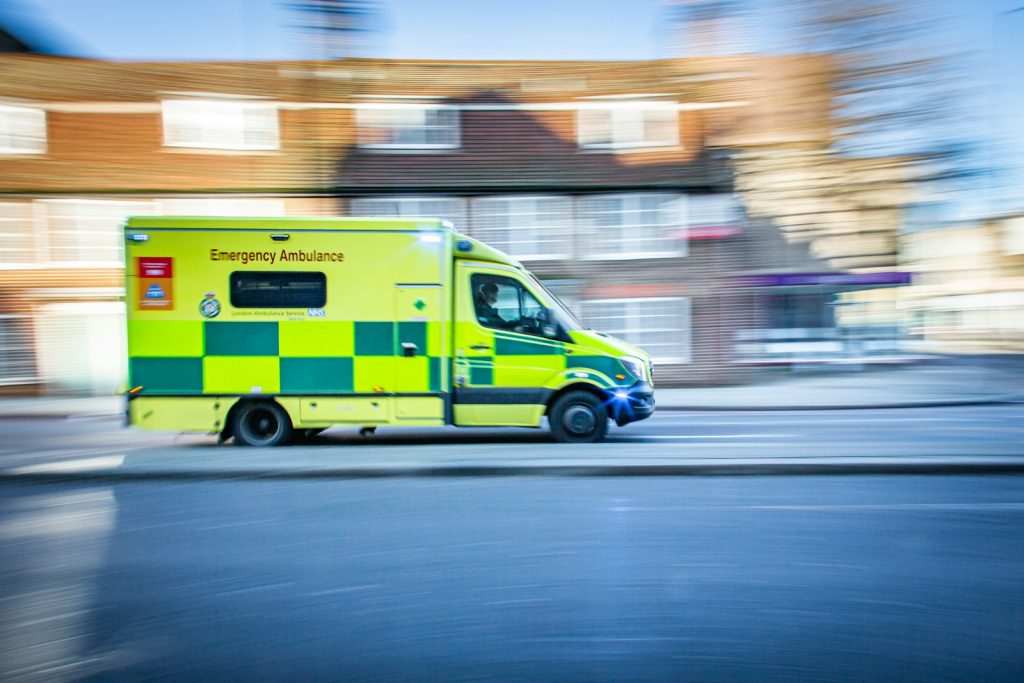
- Exemption: Ambulances responding to an emergency may exceed statutory speed limits.
- Conditions:
- Driver must have an accredited emergency driving qualification.
- Must be on an emergency call (not routine driving).
- Speed must be safe, reasonable and proportionate to circumstances.
Traffic Lights – Red Signals
- Law: TSRGD 2016, Schedule 14, Part 7.
- Exemption: May treat a red light as a “give way” sign and proceed if safe.
- Conditions: Driver must stop/slow sufficiently to ensure the junction is clear.
One-Way Streets / No Entry Signs
- Law: TSRGD 2016.
- Exemption: May contravene “No Entry” signs, one-way restrictions, and “keep left/right” arrows.
- Conditions: Only if safe, with due regard for pedestrians and other road users.
Box Junctions
- Law: TSRGD 2016, Part 7.
- Exemption: May enter a box junction even if the exit is not clear.
- Condition: Must avoid causing unnecessary obstruction.
Bus Lanes and Bus-Only Routes
- Law: TSRGD 2016, Schedule 9.
- Exemption: May use bus lanes and bus-only routes.
- Note: Most Traffic Regulation Orders explicitly exempt ambulances when responding.
Clearways, Yellow Lines, and Parking Restrictions
- Law: Road Traffic Regulation Act 1984.
- Exemption: May stop or park in restricted areas, including:
- Clearways
- Double/single yellow lines
- Pedestrian zones
- Condition: Only when necessary for emergency purposes and provided vehicle does not cause danger/serious obstruction.
Pedestrian Areas / Restricted Roads
- Law: TSRGD 2016.
- Exemption: May enter restricted/pedestrian areas when responding to emergencies.
- Condition: Must proceed at very low speed and with extreme caution.
Motorway Exemptions
Ambulances are exempt from certain motorway restrictions, including:
- Stopping on the hard shoulder (when attending emergencies).
- Reversing/turning in certain motorway areas (only under police direction).
- Using motorway service/maintenance areas in emergencies.
Crossing Stop Lines / Mandatory Turns
- Law: TSRGD 2016.
- Exemption: May ignore mandatory turn signs (e.g. “left turn only”).
- Condition: Must be safe and proportionate.
Use of Audible and Visual Warnings
- Law: Road Vehicle Lighting Regulations 1989, Regulation 16.
- Exemption: Ambulances are permitted to use blue flashing lights and sirens (“warning devices”) when:
- Responding to an emergency call
- Escorting another emergency vehicle
- Attending an incident where lives are at risk
❌ Exemptions NOT Granted
It’s equally important to note what ambulances cannot legally do, even on emergency calls:
- Ignore Stop or Give Way signs without checking the road is clear.
- Cross a railway level crossing against red lights/barriers.
- Drive dangerously or without due care and attention.
- Cross solid double white lines in the centre of the road (except in permitted cases: to pass a stationary vehicle, road maintenance vehicle, a bicycle, or horse travelling at <10mph).
- Drive under the influence of drink or drugs.
- Use a mobile phone while driving (no exemption).
✅ Summary
Ambulance drivers with blue light training can legally:
- Exceed speed limits
- Proceed through red traffic lights (with caution)
- Ignore keep left/right/one-way signs
- Enter bus lanes, pedestrian areas, yellow box junctions
- Park/stop where normally prohibited
- Use audible/visual warning devices
But they must still drive with due care and proportionality — exemptions are not a blanket immunity from prosecution.