1. Purpose
1.1. Coast Medic maintains a tradition of driving motor vehicles to an exceptionally high standard. Employees undertaking driving duties are expected to do so in an operating environment that is demanding and can be dangerous and stressful.
1.2. It is therefore necessary for the business to provide guidance and to take appropriate measures to maintain the current high driving standards by supporting, informing and educating drivers at all stages of their driving career.
2. Scope
2.1. This policy applies to all employees.
2.2. The Business is committed to making roads safer for all the people we serve. In order to assist in delivering that vision, the Business recognises that our most important resource are our employees and ensuring their health and safety is an integral part of all work activity.
2.3. There is an expectation on all employees to maintain and improve driving standards.
2.4. The aim of all drivers within the Business should be that they drive in a manner that will not lead to them being involved in any collision and if they are, it should not be their fault.
3. Roles and Responsibilities
3.1. The Chief Executive is accountable for all driving undertaken within the Business.
3.2. Operations Managers have responsibility to ensure investigations into incidents are carried out in accordance with either the incident or road collision investigation procedure. They are also responsible for the completion of relevant IR process, road traffic collision papers and implementation of action plans to reduce reoccurrence of similar incidents.
3.3. The Operations Managers are also responsible for:
- Working in conjunction with operations to obtain vehicles which are fit for purpose and comply with the Conformity of European Enormity (CEN) Regulations. The Business ensures the safety of staff and patients in ambulances by purchasing vehicles which are compliant with BS EN1789:2000.
- Ensuring that each vehicle owned, leased, hired or operated has road tax, MOT certificate and is serviced according to the manufacturer’s recommendations.
- Collating and investigating motor vehicle claims. Fleet Management and Insurance providers to ensure that the claim’s risk is minimalized.
3.4. Line managers are responsible for:
- Ensuring that their employees are made aware of this policy, and for keeping their employees up to date with any policy revision, and to ensure that their employees adhere to this policy.
- Ensuring that all vehicle incidents relating to this policy are reported as per the incident reporting or road traffic collision procedures.
- Ensuring that any vehicle collisions are investigated and acted upon to prevent reoccurrence and where necessary the Management of Serious Incidents Policy.
- Ensuring that if an employee informs them of any health condition which may affect their ability to drive safely that they are referred to Occupational Health for Advice.
4. Policy for Driving Licences
4.1. Licences for all users of vehicles must be checked in accordance with the Human Resources policy.
4.2. In addition to the above, operational employees should ensure that:
- If they break down in a vehicle the Duty Manager is informed, and their advice followed (e.g., concerning the patient) and follow the relevant breakdown procedure.
- If they are involved in a Coast Medic in a Business vehicle, they contact the Duty Officer and follow their advice (e.g. concerning the patient) and follow the relevant Coast Medic procedure.
- They inform their manager of any health issues which may impact on their ability to drive vehicles or vehicles used on behalf of the Business.
5. Health & Safety – Risk Assessment
5.1. All driving tasks and activities by an employee in the Business are formally risk assessed at a corporate level. This includes driving and related activities with vehicles. As part of the driving role employees have a responsibility to undertake a dynamic risk assessment on a continual basis during all driving activities.
5.2. All new tasks including the use of new equipment must be risk assessed.
5.3. In the event of an incident occurring, the corporate risk assessment documents may be requested by the investigating authority. Employees may be required to justify their driving actions or decisions and any thought processes related to their dynamic risk assessment.
6. Use of Vehicle and Equipment
General:
6.1. Vehicles and associated equipment require considerable on-going investment by the Business and all employees are responsible for ensuring that they are looked after correctly and used safely.
6.2. When using the vehicle there is a requirement by the Business that the employee will operate the vehicle safely, in the manner to which they were trained and/or authorised.
6.3. Failure to do so may leave the employee personally responsible for criminal prosecutions and/or action under the Business’s Disciplinary Policy.
6.4. The Business owns all of its vehicles and equipment which must only be used for official and/or authorised purposes.
Manufacturers’ Vehicle Handbook:
6.5. The handbook contains significant information which is important for the safe and correct operation of the vehicle. It is the responsibility of each employee to familiarise themselves with the handbook when they drive a new type / model of vehicle for the first time, as it will help with identifying the correct use of the vehicles systems and controls.
Daily Inspection:
6.6. Before using a Business vehicle all employees must conduct a legal road worthiness check
6.7. In very limited circumstances, there may be an urgent need to use the vehicle without carrying out a daily inspection (such as an emergency call etc). In such circumstances, once the initial call has been dealt with, the daily inspection must be carried out before any further use of the vehicle.
6.8. The purpose of the daily inspection is to ensure that the vehicle is in a safe condition to drive and that any unreported damage is recorded. It is the sole responsibility as the driver of the vehicle to carry out the checks.
6.9. Any damage found or caused must be correctly reported as soon as it is found.
6.10. Any mileage unaccounted for must be reported to a local line manager.
6.11. It is an offence to drive a vehicle without a valid road fund licence which must be in date and for that vehicle.
6.12. If it is established that a vehicle is overdue a service employee should contact the Duty Manager. If it is established that a vehicle is overdue a brake fluid check or the MOT has expired, it must be withdrawn from service and arrangements made for the required work to be carried out.
6.13. Both employees and the Business are committing an offence if a vehicle requiring a test certificate is used without one, except where the vehicle is being driven to an authorised testing station for a pre-arranged test (Road Traffic Act 1988).
Damage to bodywork:
6.14. Conduct a visual examination of the exterior for damage and defects and report any concerns to your line manager.
Underside damage:
6.15. The surface below the vehicle should be checked for any signs of fluid leaks, which may indicate a serious safety related defect. The underneath of the front and rear bumpers should be checked for any damage, which may indicate the vehicle has suffered a grounding, which may give rise to safety related defects which will require reporting to the Duty Manager.
Tyres:
6.16. All tyres fitted to a vehicle must be identical in specification in terms of the manufacture, the model, and tread pattern.
6.17. As well as checking the above, each tyre must be carefully checked for:
- Damage to the sidewalls and tread area
- Cuts & bulges
- Embedded objects
- Tread depth
6.18. NB The minimum acceptable tyre-tread depth for use is motor-cars and vans is 3mm
7. Punctures and Wheel Changing
7.1. If a puncture occurs the vehicle should be stopped, and Duty Manager contacted to arrange repairs/tyre changes. Puncture repairs must not be carried out to any tyre or inner tube by the driver unless it is used to aide in the return of the vehicle back to base. No emergency vehicle can respond to or from an incident with a repaired tyre.
7.2. Staff should adhere to any manufacture’s guidance in the use of space saver tyres and puncture repair kit as supplied with the vehicle. Response driving should be avoided until such time that the tyre has been replaced by an approved tyre supplier.
8. New / Replaced Tyres
8.1. Tyre and vehicle manufacturers, although varying in distance, suggest that when new tyres are fitted care should be taken for the initial miles covered, as grip and braking levels may not be as expected.
Tyre Pressures:
8.2. The required tyre pressures are stated in the vehicle handbook or on the vehicle. Certain duties where the vehicles are operated close to maximum payload will usually be specified to operate on full-load tyre pressures. Tyre pressures must be checked and adjusted when the tyres are cold. If the vehicle has recently been driven the tyre pressures may have increased due to heat. Therefore, pressures must not be checked or adjusted until the tyres have cooled as reducing the pressures when the tyre is hot could result in under-inflation. Running a tyre under-inflated will cause it to overheat, affecting the handling characteristics of the vehicle, and may result in irreversible structural damage to the tyre.
8.3. It may not be possible to check the tyre pressure of vehicles that are in 24/7 use at the start of every tour of duty. In these circumstances, if the tyres are not cold, a visual check should be made before the vehicle is used for any sign of under/over inflation. If an opportunity arises during a tour of duty to check the tyre pressures when the tyres are cold, this must be taken.
8.4. If any serious handling problems arise whilst the vehicle is being driven it must be taken out of service until the tyres are cold and the pressures checked and adjusted properly. If the handling is not corrected by this process the vehicle must remain out of service and the defect reported.
8.5. Always replace the valve caps having checked the tyre pressures.
Vehicle Daily Inspection continuance:
- Wheels – Check condition of the wheels, looking for any damage. Damage to wheels may indicate hidden damage to steering or suspension components. Check wheel nuts are fitted.
- Brakes – Make a visual check of the brake fluid level (if the level is low it may indicate brake pad wear or a leak – it must not be topped up – the vehicle must be taken out of service for a brake safety check).
Check handbrake holds vehicle.
Check brake pedal pressure and that there are no obstructions in the foot well of the vehicle. - Electrics – Check operation of all electrical equipment (e.g., lights, direction indicators, horn and emergency warning systems, windscreen wipers and washers).
- Oil – Check engine oil level with the engine switched off. If low, top up with the appropriate grade of oil.
- Water – Check engine coolant level. NB the engine coolant reservoir should not be opened if the engine is warm as there may be a risk of injury.
- Check windscreen washer reservoir (top up if required).
- Seatbelts – Check for fastening, wear and free running.
- If defects are found with a vehicle which renders the vehicle unroadworthy, it must be withdrawn from service until suitable repairs / maintenance is carried out by authorised persons.
9. Post Drive Checks
9.1. Drivers are required to conduct a visual examination of the exterior of the vehicle at the end of their tour of duty to ensure no damage has been sustained whilst the vehicle has been parked and unattended.
9.2. Defects found by the next driver, which are judged to be obvious and self-evident, and which should have been found during the daily inspection or post drive check, may result in an investigation of the previous driver.
9.3. All line managers have a responsibility to ensure that their employees properly carry out pre and post drive checks.
10. Defects Found
10.1. A driver who becomes aware of any defect to a vehicle, no matter how trivial, must report it.
11. Maintenance/Servicing/Repairs/Breakdowns
11.1. In the event of a Coast Medic vehicle requiring service / repair / recovery, contact the Duty Manager.
11.2. The following maintenance items/requirements may be carried out by the driver of the vehicle:
- Fill up windscreen washer/screen wash fluid bottles
- Ensure correct tyre pressure
- Top up coolant
- Change bulbs (not halogen or xenon)
- Top up oil as required
11.3. No other repair or maintenance functions will be undertaken by the driver.
11.4. Castle Garage will carry out all other repairs.
11.5. Confidential or official paperwork or documents must not be left in the vehicle.
11.6. Broken down vehicles must not be left unattended wherever possible.
11.7. Cosmetic bodywork repairs (e.g., scratches, small dents etc) must not be authorised locally. Contact should be made with Castle Garage that will assess the need to carry out such repairs at that time.
12. Cleanliness and Tidiness of Vehicles and safe storage of equipment
12.1. Drivers and passengers of vehicles are required to keep the inside of vehicles tidy and free from rubbish. Any waste should be disposed of in appropriate receptacles on a regular basis.
12.2. Articles should not be left unsecured and allowed to move around the inside of a vehicle unchecked. This is due to the potential safety hazard of something jamming under one of the foot controls, distracting the driver or hitting a vehicle occupant in the event of a collision or emergency breaking.
12.3. The routine cleaning of vehicles is normally carried out by an Ambulance Fleet Assistant (AFA) employed for such a purpose. It is recognised that operational demands may mean there is insufficient time to clean a vehicle on a daily basis, particularly if the AFA is unavailable. However, when a vehicle does become dirty, every effort should be made to have it cleaned, as it represents an image of Coast Medic. Drivers are responsible for ensuring that all glass (windscreen, windows, lights etc) are kept clear, especially during periods of inclement weather.
12.4. All employees must adhere to any issued IPC guidance document.
13. Soiled / Contaminated Vehicles
13.1. The interiors of ambulance vehicles can become contaminated or soiled with bodily fluids.
13.2. Such incidents can give rise to health and safety issues and appropriate action must be taken before the vehicle is used again and individuals put at potential risk.
- The vehicle must be taken out of service.
- It should be parked on Coast Medic premises.
- A sign must be clearly affixed to the vehicle informing of the contamination.
- The vehicle should be locked to avoid unintentional entry by someone not aware of the vehicles condition.
- The vehicle should not be sent for repair until it is cleaned.
- Local instructions should then be followed to decontaminate the vehicle.
13.3. Once the vehicle has been cleaned it may be returned to service.
14. Doors
14.1. It is the drivers’ responsibility to ensure that doors on vehicles are kept shut whilst the vehicle is in motion. This includes sliding doors if fitted.
15. Vehicle Stability and Traction Control Systems
15.1. All vehicles are fitted with stability and traction control systems (ASC, DSC, ESP, VSA etc.).
15.2. These systems are designed to recognise if the vehicle is starting to exceed safe operating parameters in respect of vehicle stability. If the vehicle is at risk of becoming unstable due to either understeer or oversteer, the system intervenes to reduce the risk of the driver losing control.
15.3. It is very important to be aware that these systems are fitted to enhance safety. They must not be considered as justification to exceed normal limits.
15.4. The driver must not turn off any such system fitted to a vehicle.
16. Vehicle payload
16.1. It is the responsibility of the driver to ensure that their vehicle is not overloaded and that all equipment or items carried are safely secured.
17. Vehicle Specification
17.1. Vehicles used by the Business are selected and specifically equipped to perform clearly defined roles for which they must be fit for purpose, legal and safe.
17.2. There are many UK and EU legislative requirements that must be adhered to when fitting, carrying or operating equipment within or on vehicles.
17.3. Under no circumstances are any modifications or the fitting of additional equipment to be carried out or authorised.
18. Vehicle Livery
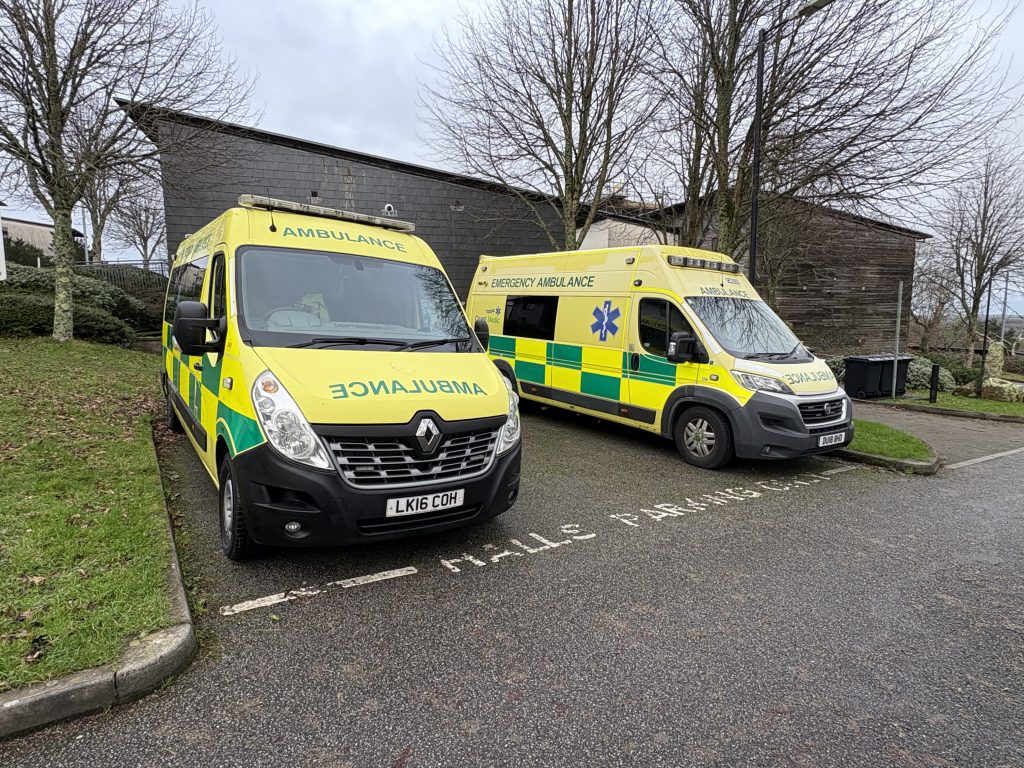
18.1. Coast Medic operates a nationally recognised livery scheme.
18.2. Under no circumstances can any user carry out any modifications, additions to or change to the approved scheme.
18.3. If changes are required, the approval and authority of the Chief Executive must be sought.
18.4. This applies to all vehicles that can be identified as Coast Medic vehicles, whether fleet, donated, sponsored, hired or partnership.
18.5. If a vehicle is to be used outside of the United Kingdom, the Duty Manager must be contacted to arrange European insurance cover prior to taking the vehicle outside of the UK.
19. Refuelling
19.1. It is good practice to re-fuel the vehicle at or near the end of the tour of duty.
19.2. All operational vehicles must be left with a minimum of a ½ tank of fuel so that any future emergency / urgent situation can be responded to by the following driver without the need to re-fuel. Asda or Tesco are the preferred fuelling stations.
20. Incorrect Fuelling – Action to Be Taken
20.1. If the error is discovered / noticed before the ignition / engine is switched on:
- Do not start the engine under any circumstances
- Call the Duty Manager for further advice
- The vehicle can be pushed to a less obstructive position
- If the error is discovered / noticed after the engine has been run:
20.2. If already moving, find the nearest place to pull over safely; this should be the shortest distance possible:
- Switch off the engine / ignition immediately
- Do not turn engine on again
- Call the Duty Officer for further advice
21. Parking
21.1. Coast Medic vehicles left unattended should never have the vehicle keys left in them, with the engine running, unless there is a need for vehicle equipment to be powered by a running engine.
21.2. Where the incident permits, the driver must remain within sight of the vehicle whilst the keys are in it.
21.3. Vehicles should be locked when parked and unattended.
21.4. Personal issue radios, IT equipment, personal safety equipment and confidential correspondence should not be left on view in parked or unattended vehicles reducing the risk of theft.
21.5. Wherever possible, vehicles used by employees should be parked legally, complying with parking regulations.
21.6. However, Coast Medic vehicles may need to be parked in contravention of parking restrictions where there is an operational necessity for the vehicle to be left as close to a location as possible. Consideration should still be given to the location and vehicles should be parked in a safe position, causing as little congestion as possible.
22. Carrying of Passengers – All Cases
22.1. The driver is responsible for ensuring that:
- The maximum seating capacity for the vehicle is not exceeded.
- All passengers must have their own seat or be secured on a stretcher/incubator/child seat.
- All passengers must be seated when the vehicle is moving.
- The weight of any load carried is not excessive for the type of vehicle used.
- All passengers wear seat belts.
- No one smokes in or on the vehicle.
- Any required paperwork is completed.
22.2. Portable Satellite Navigation Systems (PSNS)
22.3. PSNS is not to be used unless approved by Coast Medic and only approved systems will be provided for use in its vehicles.
22.4. Each installation of a portable or temporary fix device in a vehicle should be individually risk assessed by the driver to ensure the installation does not:
- Impede the deployment of any safety restraint system (e.g., airbags).
- Restrict the vision through the vehicle windscreen to an extent that any portion of the carriageway is not clearly visible to the driver.
- Interfere with the operation of any vehicle control.
- Detach causing possible danger: ensure it is securely fitted.
22.5. PSNS must not distract the driver from the safe operation of the vehicle.
22.6. A Road Traffic Offence of \\\”not being in proper control,\\\” may be committed by the driver if manual use is made of the equipment whilst the vehicle is in motion.
23. Mobile Phone Use/Handheld devices and Digital Radios
23.1. There is no legal exemption for ambulance drivers to operate mobile phones (unless an approved hands-free kit is fitted). Personal issue handheld Airwave radio sets are to be treated in the same way as mobile phones regardless of whether they are being used in radio or telephony mode. The exception to this is when the handheld Airwave radio is being used in a vehicle mounted cradle in hands free mode.
23.2. Research has shown that even when using hands free kits, concentration levels are not as high. It is safer to pull over and stop to make or receive mobile phone calls. It is recommended that hands free kits are only used when absolutely necessary.
24. Consumption of Food and Drink in Coast Medic Vehicles
24.1. The consumption of food and drink within a Coast Medic vehicle is strictly prohibited whilst that vehicle is in motion (with the exception of a cold drink from a suitable self-contained vessel by the attendant).
24.2. Food and drink must not be consumed in any patient bearing area of a vehicle at any time. The consumption of food and drink in non-patient bearing areas whilst stationary is permitted, although the vehicle should be discretely parked away from public view as far as is reasonably possible. Strong smelling food should be routinely avoided for the comfort of patients and colleagues.
25. Smoking/Unauthorised Passengers & Equipment
25.1. Staff or permitted passengers may not smoke or use e-cigarettes in or on vehicles being used for Coast Medic purposes.
25.2. The carriage of any unauthorised passenger, equipment or other items is not permitted.
25.3. Observers must have in place an observer agreement or other written agreement from a manager. Crew staff should ensure familiarity with their responsibilities within this policy.
26. Wearing of Seat Belts/Restraints for Patients, Escorts and Attendant
26.1. Drivers and all passengers (including the attendant) are required by law to wear front seat belts in all types of vehicle. The same rule applies to rear seat belts in cars, and those in small minibus vehicles (i.e., an unladen weight of less than 2540kg).
26.2. There are three exemptions:
- If you are driving a vehicle and are carrying out a manoeuvre at low speed which includes reversing.
- If you have a valid medical exemption certificate.
- If your seat belt has become defective on your journey, and you are en-route for subsequent repair at a workshop. Should the front passenger belt be defective, the attendant or passenger should travel in another seat with a working seat belt for this journey. If the driver seat belt is faulty, the vehicle should be recovered.