
Executive Summary
Coast Medic Ambulance Ltd delivered a fully integrated event medical service for the Falmouth Sea Shanty Festival, providing a centrally located Medical Treatment Centre, a dedicated conveyance ambulance, and rapid response vehicles positioned to cover Falmouth town. The service was designed to manage the risks associated with a high-footfall, alcohol-present, multi-venue cultural festival while maintaining fast clinical response times and clear escalation pathways. The deployment supported event safety, ensured timely access to care, and reduced avoidable demand on local NHS services.
Event Context and Clinical Risk Profile
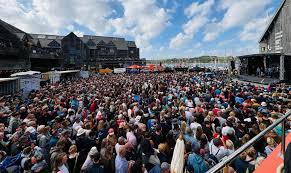
The Falmouth Sea Shanty Festival is a large, town-wide cultural event drawing significant crowds across multiple indoor and outdoor venues. The clinical risk profile included:
- Crowd-related incidents: slips, trips, falls, and minor trauma
- Alcohol-related presentations: intoxication, injury, and medical complications
- Medical emergencies: chest pain, collapse, seizures, asthma, diabetic events
- Environmental factors: variable weather, prolonged standing, dehydration
- Logistical complexity: dispersed venues requiring mobile response capability
A scalable, multi-layered medical model was required to provide both visible public reassurance and rapid response across the town footprint.
Objectives
- Establish a Medical Treatment Centre (MTC) to manage walk-in and referred casualties.
- Provide on-site ambulance conveyance for time-critical escalation and monitored transfer.
- Deploy rapid response vehicles to achieve swift access across multiple venues.
- Staff the event with a multi-disciplinary clinical team matched to the anticipated risk profile.
- Operate within a robust clinical governance framework consistent with CQC standards.
Coast Medic Ambulance Solution
1) Medical Treatment Centre (MTC)
A dedicated MTC was established within Falmouth town, acting as the primary hub for:
- Clinical triage and assessment
- Treatment of minor and moderate injuries and illnesses
- Observation, monitoring, and safety-netting
- Clinical decision-making to determine appropriate onward pathways (self-care, referral, or conveyance)
The MTC reduced pressure on emergency departments by safely managing suitable cases on site.
2) Ambulance Conveyance Capability
A fully equipped ambulance was deployed to provide:
- Immediate escalation for life-threatening or high-acuity presentations
- Monitored transfer to acute services when clinically indicated
- Reassurance to organisers, authorities, and the public that emergency transport was immediately available
3) Rapid Response Vehicles
Rapid response vehicles were positioned to cover the wider Falmouth town footprint, enabling:
- Fast access to incidents across dispersed venues
- Early clinical assessment and stabilisation
- Efficient triage decisions, with patients either treated on scene, referred to the MTC, or escalated to ambulance transfer
Clinical Staffing Model
The event was staffed by a multi-disciplinary team, ensuring the right skill mix for a complex festival environment:
- Paramedics – advanced assessment, decision-making, and emergency intervention
- Registered Nurses – treatment centre operations, minor injury/illness management, and observation
- Emergency Care Assistants (ECAs) – patient support, clinical assistance, and ambulance operations
- Responders – first contact, initial assessment, and rapid scene management
This layered model ensured resilience, clinical depth, and safe task allocation across the event.
Governance, Communication, and Safety
As a CQC-regulated provider, Coast Medic Ambulance operated under established governance processes, including:
- Structured patient documentation and incident reporting
- Clear clinical escalation and referral pathways
- Infection prevention and control measures appropriate to a festival setting
- Safeguarding awareness within a crowded, alcohol-present environment
- Real-time communication with event control and organisers
Post-event debriefing captured learning to inform continuous improvement for future festivals.
Outcomes and Impact
- Timely access to medical care for festival-goers across Falmouth town
- Effective management of presentations on site, reducing unnecessary ED attendance
- Rapid response to higher-acuity incidents through integrated ambulance and RRV deployment
- Enhanced public and organiser confidence through a visible, professional medical presence
Conclusion
The Falmouth Sea Shanty Festival demonstrated Coast Medic Ambulance’s capability to deliver complex, town-wide event medical cover at scale. By combining a Medical Treatment Centre, ambulance conveyance, rapid response vehicles, and a skilled multi-disciplinary clinical workforce, Coast Medic provided a safe, resilient, and clinically governed solution tailored to a high-footfall cultural event.
